When should you call about roof repair?
A roof can often be repaired instead of replaced when the damage is limited to one area and the rest of the roof still has life left. These are the signs that something on your roof in Austin needs a repair.
- Stains on a ceiling or wallBrown rings, bubbling paint or a damp spot after rain mean water is getting past the roof. Water often runs along rafters first, so the leak may be a few feet away from the stain.
- Missing, cracked or lifted shinglesWind can tear shingles off or break the seal that holds them flat. Each bare spot lets rain reach the layer underneath, which isn't made to stay exposed.
- Leaks around a chimney, skylight or ventThe seams around things that poke through the roof often fail long before the shingles do. Old sealant cracks, and the rubber collars around plumbing vents split after years in the sun.
- A damp attic or daylight through the boardsLook in the attic after a rain. Wet insulation, dark stains on the wood, rusty nail tips or light showing through gaps all point to where water gets in.
- A soft or sagging spotA dip in the roof line or a spongy feel underfoot can mean the wood decking has been wet for a while. It needs a closer look soon, before the rot spreads.
- Damage from a fallen limbEven a small branch can crack shingles, punch holes or bend flashing. Damage that looks minor from the ground is often worse up close.
What are your roof repair options?
Most roof repairs fall into a few types. The right fix depends on where the water gets in, what the roof is made of and how much life the rest of it has left.
Shingle replacement
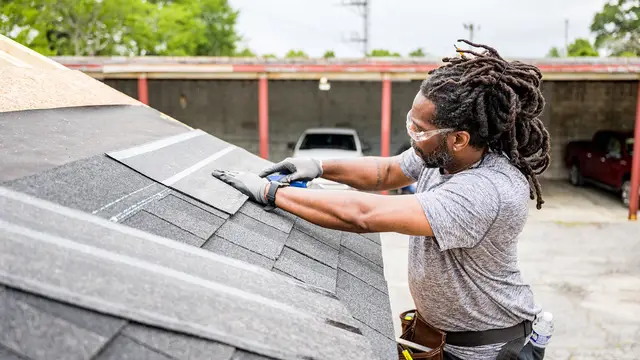
Damaged shingles are pried loose, pulled out and replaced with new ones that are nailed and sealed under the row above. It is quick and one of the lower-cost repairs. The catch is matching: older shingles fade, and some styles are no longer made, so a patch can show from the street. It works well when damage is limited to a small area and the shingles around it are still flexible, not brittle.
Best for: A few missing or damaged shingles on a roof that is otherwise sound
Flashing repair or replacement
Flashing is the metal that seals the joints where the roof meets a wall, chimney, skylight or valley. Adding fresh sealant over old flashing can stop a drip for a while, but it is a short-term fix. Replacing the flashing lasts much longer. It means lifting the shingles around it and, at a brick chimney, often cutting new grooves in the mortar so the top piece tucks into the brick.
Best for: Leaks at chimneys, walls, skylights and valleys
Vent boot and penetration repair
Every pipe, fan and vent that passes through the roof has a collar or flashing around it. Rubber vent boots crack in the sun, metal vents rust or get dented, and old holes from satellite dishes or removed vents are often sealed with nothing but caulk. Swapping a boot or properly patching an old hole is a small job, and it fixes one of the most common sources of roof leaks.
Best for: Drips below a plumbing vent or exhaust fan
Decking repair
When water has soaked the wood under the shingles for weeks or months, the plywood or boards soften and rot. The shingles and underlayment over that area come off, the bad decking is cut out and replaced, and new underlayment and shingles go back on. This costs more than a surface repair because the damage is hidden until the roof is opened, but skipping it leaves new shingles on wood that can't hold nails.
Best for: Soft spots, sagging areas and long-running leaks
What affects the cost of a roof repair job in Austin?
The price of a roof repair depends less on the size of the patch than on how hard it is to reach and what turns up underneath. A written quote from Summit Ridge Roofing after someone has looked at your roof in Austin is the only way to know the cost of your repair.
| What it is | Why it matters | Effect on price |
|---|---|---|
| Roof pitch and height | Steep or tall roofs need harnesses, roof jacks and more time to work safely. | High |
| Damage under the shingles | Rotten decking or wet insulation only shows once the roof is opened, and it adds labor and materials. | High |
| Type of roofing | Tile, slate and metal take more care and special parts than asphalt shingles, and tile can break when walked on. | Medium |
| Where the leak is | Chimneys, skylights and valleys have more layers to take apart and put back than an open stretch of roof. | Medium |
| Matching materials | Finding or ordering shingles close to an older roof's color and style can add time and cost. | Low |
Comparing quotes: Ask each roofer to write down exactly what they will repair and what they found, with photos. A quote that only says to fix the leak leaves room for a second visit and a second bill.
How does a roof repair job work, step by step?
A roof repair visit usually runs in the same order. Telling the roofer when and where the water shows up saves time on the search.
- Your descriptionYou explain where the water appears and when: heavy rain, wind from one direction, or melting snow. Those clues help narrow down where it gets in.
- Inside and outside checkSummit Ridge Roofing looks at the stain, goes into the attic if there is access, then checks the roof above that area and the slopes that drain toward it.
- Photos and a written quoteYou see photos of the problem and get a written scope that says what will be removed, repaired and replaced.
- Temporary cover if neededIf rain is coming before the repair can be done, a tarp or temporary patch can keep water out in the meantime.
- The repairDamaged materials come off, the decking is checked and repaired if needed, then new underlayment, flashing and shingles go on and are sealed.
- Cleanup and follow-upOld materials and nails are picked up. After the next good rain, check the attic and ceiling; once the stained area is fully dry, it can be primed and painted.
Permits, inspections and warranties in Austin
Small repairs such as replacing a few shingles or a vent boot often don't need a permit. Larger repairs that replace decking or a big section of roof can cross into what a city treats as reroofing, which usually does. Rules differ by city and county, so check with the building department that covers your address in Austin, or ask Summit Ridge Roofing to confirm what applies.
If your roof is fairly new, check its paperwork before any repair. Some shingle warranties have conditions about who can work on the roof and how. For the repair itself, ask for the workmanship warranty in writing. A repair warranty usually covers only the area that was fixed, not leaks elsewhere on the roof.
How to choose a roofer for roof repair in Austin
A good roofer for a repair in Austin will show you the problem, explain why it happened and tell you honestly whether a repair makes sense or the roof is near the end of its life.
What to check
- Photos of the problem before the work and of the finished repair
- A written quote that names each part of the repair
- Proof of liability insurance and workers' compensation coverage
- A license or registration where your state or city requires one
- A straight answer on whether to repair or replace
- A local phone number and address you can reach if the leak comes back
Questions to ask
- Where exactly do you think the water is getting in, and why?
- Will you check the decking while the shingles are off?
- How close will the new shingles match the old ones?
- How do you price extra work if you find rotten wood?
- Is the rest of my roof in good enough shape to be worth repairing?
- What does your workmanship warranty cover on this repair, and for how long?
Roof Repair questions in Austin
Can a roof leak be fixed without replacing the whole roof?
Yes, in many cases. If the leak comes from one spot, such as flashing, a vent boot or a few missing shingles, and the rest of the roof is sound, a repair is the sensible choice.
Why is the stain on my ceiling far from where the roof leaks?
Water that gets past the shingles often runs along the decking, rafters or the top of the insulation before it drips. The stain shows where it finally lands, not where it got in, which is why the attic check matters.
Can a small roof leak wait a few months?
It is risky. Even a slow drip soaks decking, insulation and drywall, and wet wood can rot or grow mold. If the repair can't be done right away, a temporary patch or tarp limits the damage.
Can a roof be repaired while it's raining?
A tarp or temporary patch can go on in light rain if it is safe to be on the roof. A lasting repair needs a dry surface so new shingles and sealants bond, so it waits for dry weather.
Does homeowners insurance pay for roof repairs?
It depends on the cause and your policy. Sudden damage from wind, hail or a fallen tree is often covered, while wear and old age usually are not. Your insurer decides what is covered.
Is caulk a good way to fix a roof leak?
Only as a short-term patch. Sealant dries out and cracks in the sun, often within a season or two. A lasting fix replaces the failed flashing, vent boot or shingles instead of covering them.
When is a roof repair not worth it?
When the roof leaks in several places, the shingles are curling or brittle across whole slopes, or the decking is soft in many spots. At that point repairs tend to pile up, and replacement is usually the better spend.
Can I fix a roof leak myself?
Roof work is dangerous, especially on steep or wet roofs, and a patch in the wrong place can hide the real problem. If you want to help, check the attic with a flashlight and take photos of what you find to share with Summit Ridge Roofing in Austin.