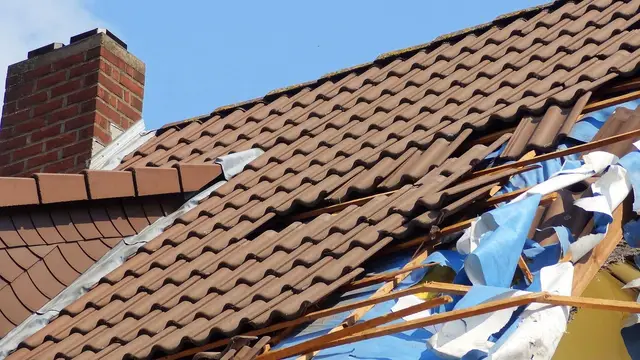
When should you call about storm damage?
Hail and wind damage is often invisible from the ground, and a roof can look fine for months before leaks start. After a storm in Austin, these are the signs worth a closer look.
- Shingles in the yardPieces of shingle, ridge cap or flashing on the ground mean the wind tore them off. Even if you can't see a bare spot, the area around it may be loose.
- Dents in soft metalCheck gutters, downspouts, vent caps, the air conditioner's fins and the mailbox. Fresh dents there mean the hail was big enough to damage shingles too.
- Dark spots or granules at the downspoutsHail knocks the gritty coating off shingles and leaves dark, round marks. A fresh pile of granules at a downspout after a storm is a warning sign.
- Creased or flapping shinglesStrong wind lifts shingle tabs and breaks the seal. A lifted tab often leaves a crease line across it and is likely to tear off in the next storm.
- Branches or trees on the roofA fallen limb can crack shingles, puncture the decking or bend flashing, even when it looks like a small hit from the ground.
- New leaks or stains after the stormWater inside right after a storm points to an opening that needs a temporary cover before more rain comes.
What are your storm damage options?
Storm work ranges from a quick temporary cover to a full replacement paid largely through insurance. What you need depends on the kind of damage and how much of the roof it covers.
Emergency tarping
A heavy tarp is fastened over the damaged area, usually held down with boards along its edges, to keep rain out until the permanent repair. Many insurance policies expect you to take reasonable steps to stop further damage, and a tarp is often that step. It is only temporary: tarps work loose in the wind and break down in the sun, so plan the repair soon after.
Best for: Holes, missing sections or active leaks right after a storm
Wind damage repair
Lifted, creased or missing shingles are replaced and the loose tabs are resealed. This works when the damage is limited to a few areas and the shingles are still flexible. On an older roof, brittle shingles can crack when the roofer lifts them to slide in new ones, which can turn a small repair into a bigger job. Ask about that risk before the work starts.
Best for: Wind damage in a few spots on a roof in good shape
Hail damage replacement
Hail rarely hits just one spot; it usually marks every slope that faced the storm. Adjusters often check marked test areas on each slope, and when they find enough damage, the slope or the whole roof may be replaced under the claim. Replacement after hail is also a chance to move up to impact-rated shingles.
Best for: Hail damage spread across one or more slopes
Gutters, vents and exterior metal
Hail and wind also damage gutters, downspouts, vent caps, skylight frames, chimney caps and flashing. These parts are easy to leave out of a claim because they still work, even when dented. Listing them with photos makes sure they are looked at in the estimate. Siding, windows and fences are often handled by other trades, so ask who will repair those.
Best for: Dented or bent metal parts around the roof
What affects the cost of a storm damage job in Austin?
When insurance pays for storm work, what you pay out of pocket is often your deductible plus anything the policy doesn't cover. The claim amount and the quote still depend on the factors below. Summit Ridge Roofing can walk your roof in Austin and put the damage in writing with photos.
| What it is | Why it matters | Effect on price |
|---|---|---|
| How much of the roof is damaged | A few spot repairs cost far less than replacing every slope. | High |
| Roofing material | Metal, tile and premium shingles cost more to repair or replace than standard shingles. | High |
| Code upgrades | A replacement may have to meet current code, such as added underlayment or ventilation, and not every policy pays for those upgrades. | Medium |
| Interior damage | Leaks that reached ceilings, insulation or walls add drying and repair work inside. | Medium |
| Exterior metal and gutters | Dented gutters, vents and flashing add parts and labor to the scope. | Medium |
| Your deductible | Some policies have a separate wind or hail deductible, which changes what you pay yourself. | Medium |
Comparing quotes: Compare the roofer's scope with the adjuster's estimate item by item. If the estimate leaves out drip edge, vents, flashing or gutters that were damaged, the roofer can share photos so you can ask your insurer to review it. Be wary of any offer to cover or waive your deductible; it can be illegal where you live.
How does a storm damage job work, step by step?
Storm work has more steps than a normal repair because your insurance company is involved. Here is how it usually goes.
- Make it safeStay off the roof. If water is coming in, Summit Ridge Roofing can put a tarp over the opening to stop more damage while the claim gets started.
- Inspection and photosEach slope is checked, damage is marked and photographed, and dents on gutters, vents and other metal are noted with dated photos.
- Your claimYou call your insurer and file the claim. The policy, the deductible and any deadlines are between you and your insurance company.
- Adjuster visitAn adjuster inspects the roof. Having your roofer there helps make sure all of the damage gets seen and photographed.
- Scope and written quoteOnce the estimate arrives, the roofer's written quote is matched to it, and any missed items are raised with your insurer.
- Repair or replacementThe work is scheduled, materials are ordered and the roof is repaired or replaced to current code.
- Final paperworkYou get the final invoice and photos of the finished work. Some policies hold back part of the payment until the insurer sees that the work is done.
Permits, inspections and warranties in Austin
Small storm repairs may not need a permit, but a full replacement usually does. After a big storm, building departments get busy, and some set special rules for contractors working in the area. Check with the building department that covers your address in Austin about permits and whether roofers must be registered there.
Your policy decides what is covered, not the roofer. Read your policy's claim deadlines, take dated photos of the damage, keep receipts for tarps and emergency work, and don't throw away damaged pieces until the adjuster has seen them. If a contract would sign over your claim to a contractor, read it closely and ask your insurer before you sign.
New roofing put on after a storm comes with the maker's material warranty and the installer's workmanship warranty. Many standard shingle warranties don't cover future hail, while some impact-rated products have different terms. Ask for the workmanship warranty in writing, and keep it with your claim paperwork.
How to choose a roofer for storm damage in Austin
After a big storm, crews from out of town knock on doors, and some leave the area once the storm work is done. Choose a roofer you can still reach in Austin next year if a problem shows up, not just the first one at your door.
What to check
- A local address and phone number, not just a truck and a yard sign
- Proof of insurance and any license or registration your area requires
- Dated photos of damage on each slope and on gutters and vents
- Willing to meet your adjuster on the roof
- A written scope that lines up with the insurance estimate
- No deductible waiver and no large payment before materials arrive
Questions to ask
- Can you show me photos of the damage on each slope?
- Will you be at the adjuster's inspection?
- What happens if the insurance estimate leaves out damage you found?
- Does anything in this contract sign over my insurance claim to you?
- When is payment due, and how does that line up with the insurance checks?
- What does your workmanship warranty cover on storm work, and for how long?
Storm Damage questions in Austin
How can I tell if hail damaged my roof?
From the ground, look for dents in gutters, vents and the air conditioner, and granules at the downspouts. The roof itself needs a close look, since hail bruises are often soft dark spots that can't be seen from the yard.
Should I call my insurance company or a roofer first?
Many homeowners have a roofer inspect first, so they know whether there is real damage before filing a claim. If water is coming in, cover the opening and contact your insurer right away.
Will a storm claim raise my insurance rates?
It depends on your insurer, your claim history and whether the storm hit many homes in your area. Your agent can explain how a claim may affect your policy before you file.
What should I do if a storm crew knocks on my door?
Take their card, then check them out before you sign anything. Look for a local address, proof of insurance and references from nearby jobs, and get more than one inspection.
How long do I have to file a storm damage claim?
It depends on your policy, and some deadlines are shorter than people expect. Check the policy or call your agent, and file as soon as you know there is damage.
What if the adjuster misses damage or denies the claim?
You can ask your insurer for a second inspection and share your roofer's photos. Some homeowners also hire a public adjuster, who works for the homeowner instead of the insurance company, for a fee.
Can I get impact-resistant shingles after a hail storm in Austin?
Yes. If your roof is being replaced, impact-rated shingles are usually an option for a higher cost. Some insurers give a discount for them, so ask your agent what applies to your policy.
Is it okay to put off repairs if the roof isn't leaking yet?
Hail bruises and broken seals can take months to start leaking, and your claim deadline may pass in the meantime. An inspection soon after the storm keeps both your roof and your claim on track.
What is recoverable depreciation?
Some policies pay the roof's depreciated value first and the rest after the work is done. The held-back amount is the recoverable depreciation, and the insurer usually needs the final invoice to release it.